
The Problem
Kinship care often begins in crisis — when grandparents, aunts, uncles, or family friends suddenly take on the care of a child. These carers face complex legal, financial, and emotional challenges with little guidance and almost no dedicated support.
The challenge: How might we build a digital hub that gives kinship carers immediate, personalised support from the very first moment of crisis?
Impact
20 carers
Interviewed across every stage of kinship care — first crisis through long-term support.
7 partners
Stakeholder interviews mapping how Kinship and its partners deliver support today.
50+ surveys
Validated patterns of need across a wider, more representative carer sample.
2 in alpha
A personalised guide and a live-chat entry point — both shipped into alpha testing.
The two alpha concepts — a personalised guide for scenario-specific information and a live chat for immediate one-to-one help — gave carers a way to feel recognised and supported from the very first moment they reached out.
Goals & Objectives
- Enable carers to access information and expert guidance throughout their journey
- Provide assistance with grants and allowances
- Facilitate peer connections among kinship carers
- Ensure carers feel recognised, valued, and supported
My Role
- Defined key opportunities and delivered design concepts
- Conducted user and stakeholder interviews
- Analysed qualitative and quantitative data
- Identified opportunities through hypothesis mapping
- Created low-fidelity prototypes collaboratively with the team
Research & Discovery
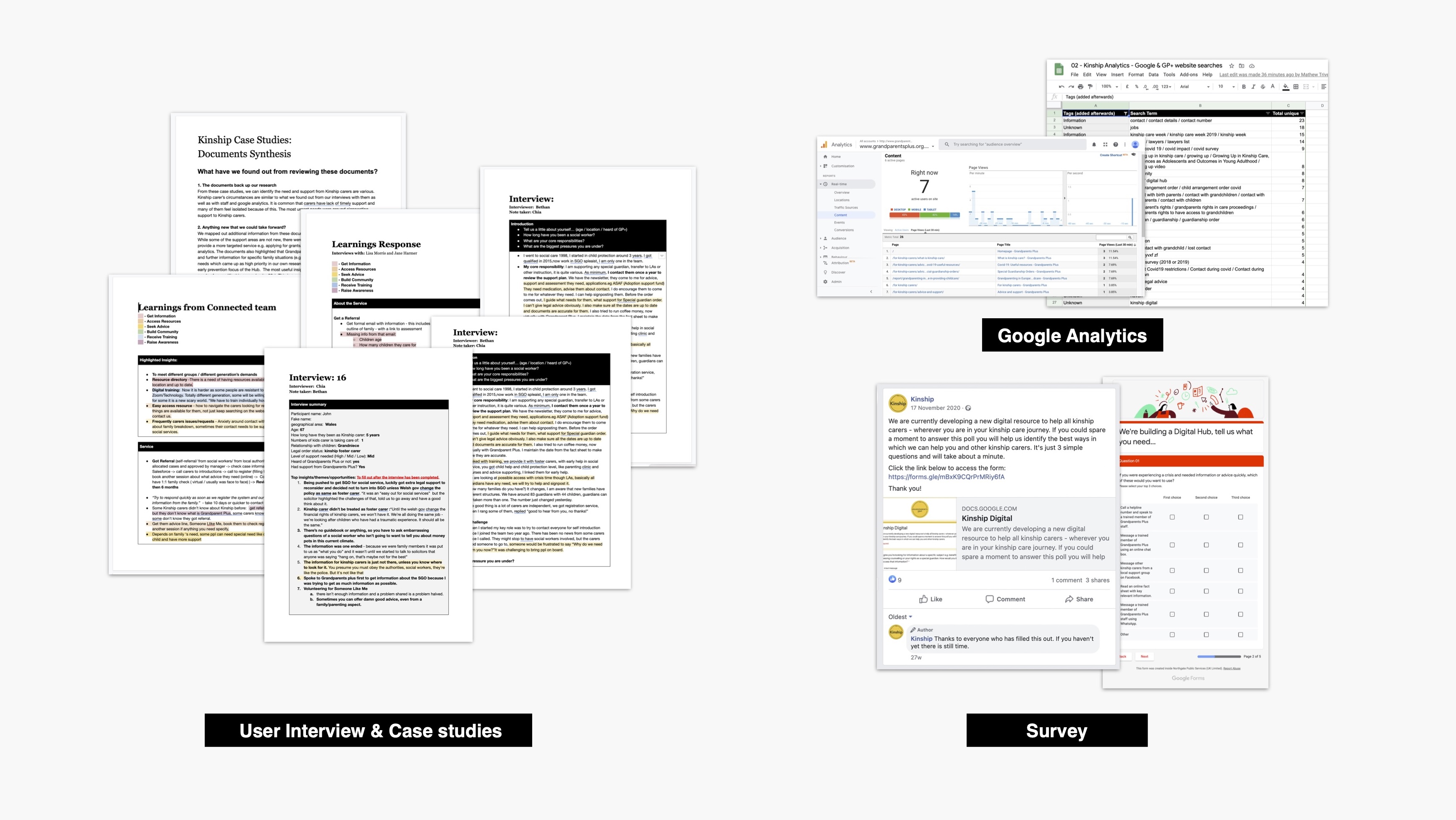
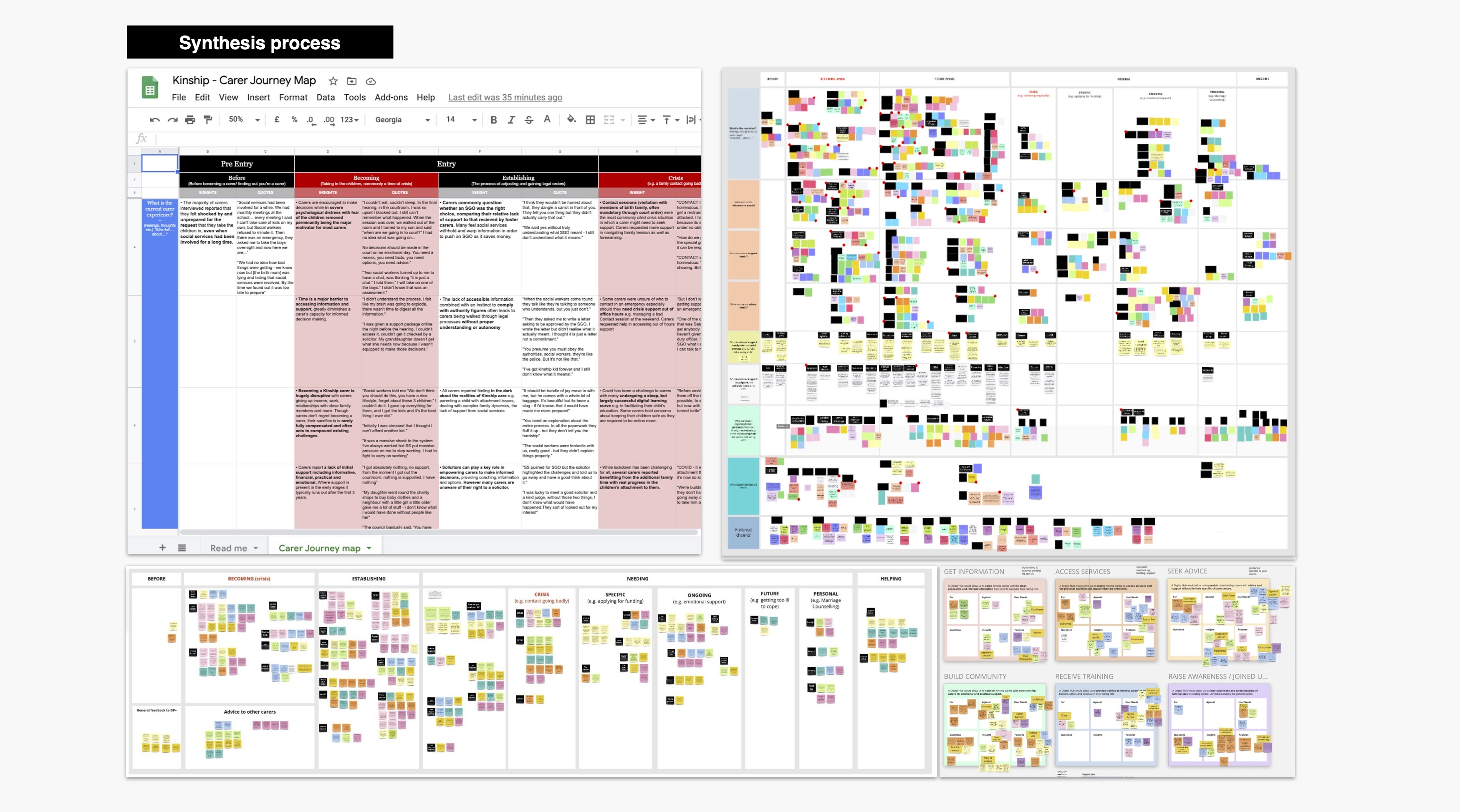
Our discovery phase was extensive and grounded in real stories. We synthesised findings across four themes: experience stages, support and information needs, service touchpoints, and preferred communication channels.
Process
Listen
20 carer + 7 stakeholder interviews
Synthesise
Four-theme framework + journey maps
Prioritise
Impact–effort–testability matrix
Prototype
Lo-fi concepts tested in alpha
Discovery Challenges
The scope was initially very broad, requiring careful refinement:
- Complex multi-channel touchpoints spanning websites, social services, and legal processes
- Prioritising synthesis findings for what could realistically be tested in alpha
Solutions
From our research, we identified five key need categories:
- Further crises — family conflicts and unexpected escalations
- Specific needs — funding applications and assessments
- Long-term needs — attachment issues and ongoing support
- Personal needs — counselling and emotional support
- Giving back — volunteering and peer mentoring
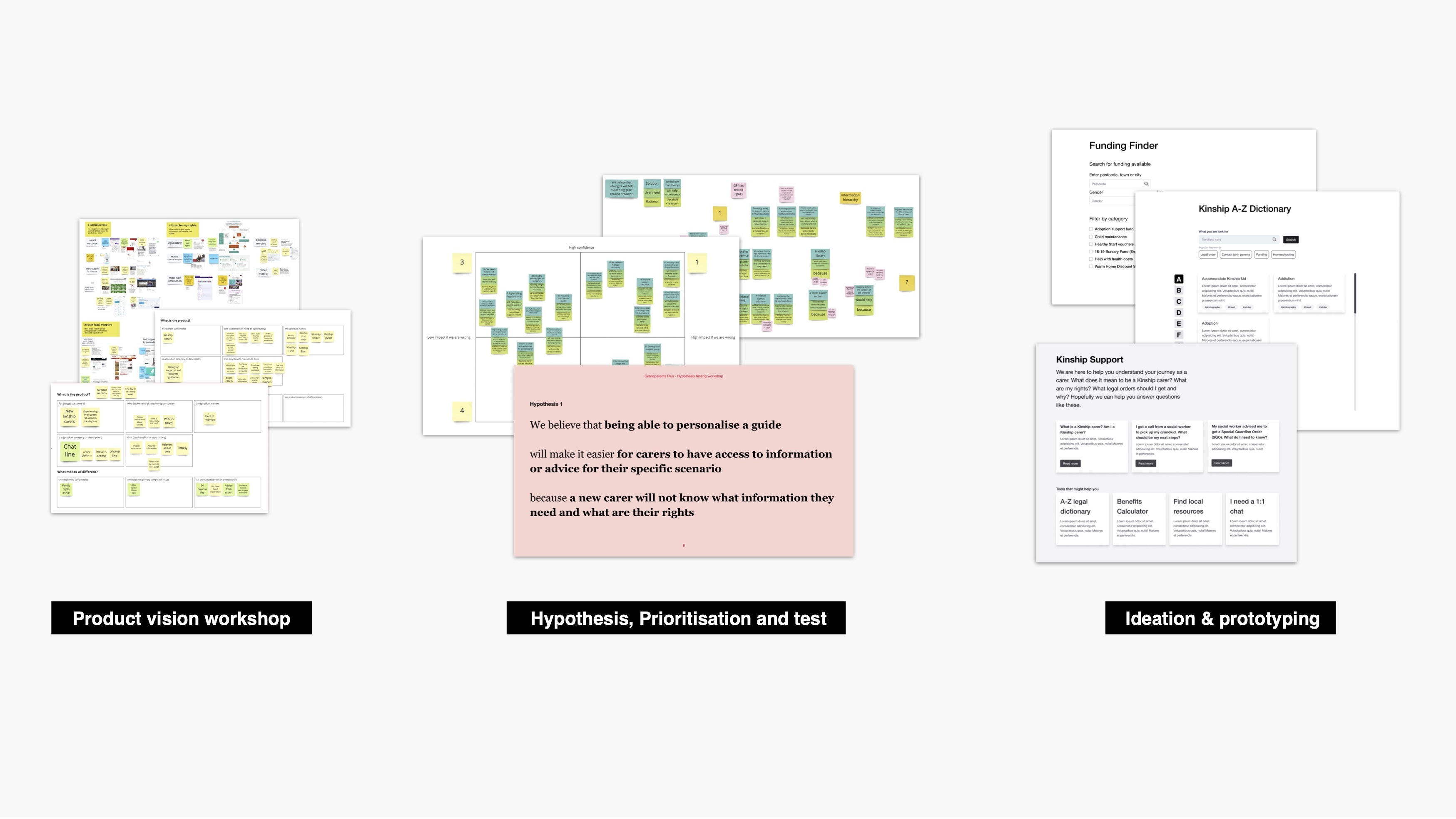
We used an impact–effort–testability matrix to prioritise hypotheses based on crisis relevance, feasibility, and testability.
Key concepts delivered
A personalised guide — Scenario-specific information for new carers unfamiliar with their rights and available resources. Meeting people where they are in their journey.
Live chat support — Immediate 1:1 support for urgent questions, reducing the anxiety of navigating the system alone.
Final Design
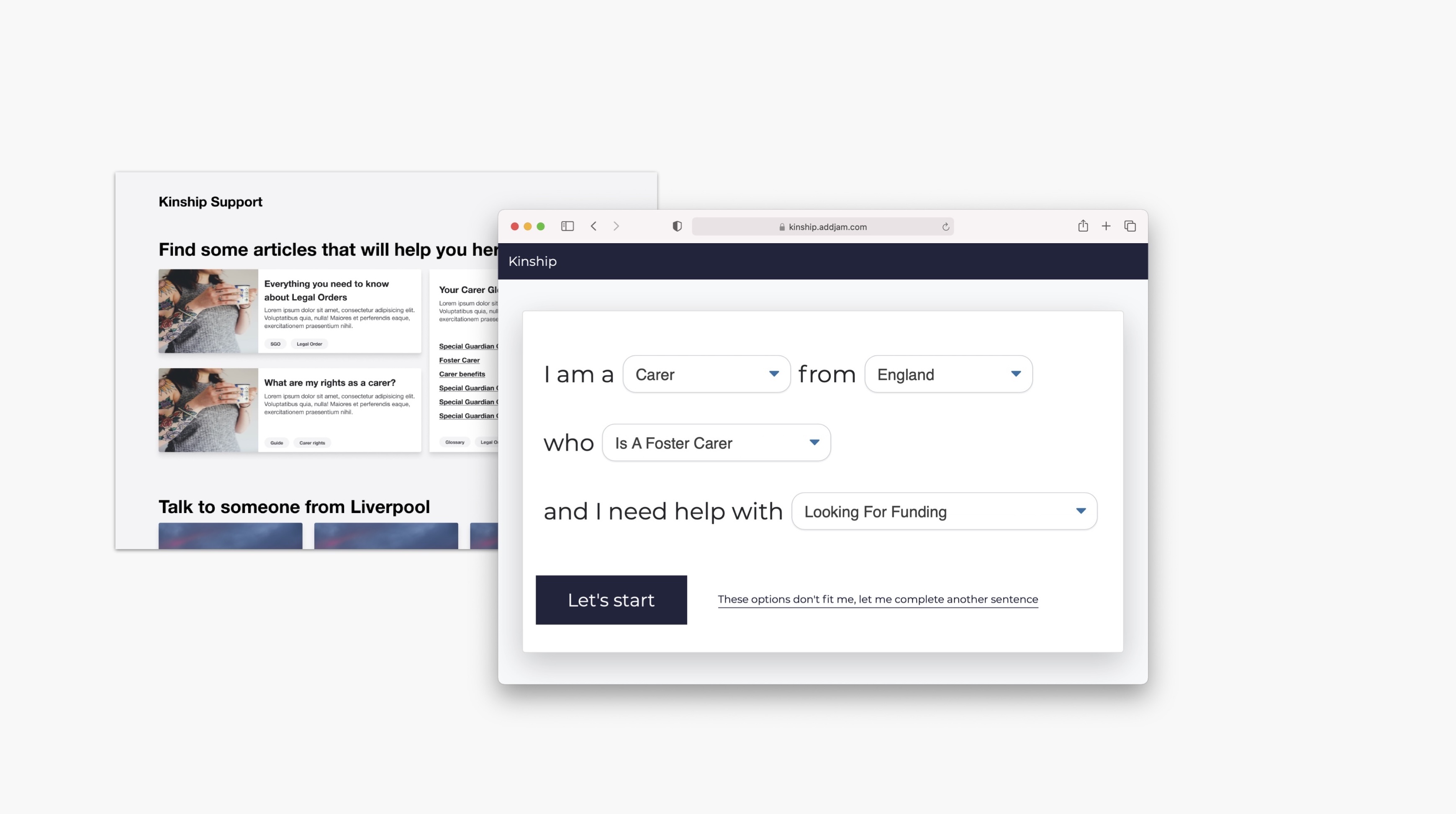
Proposal A — a sentence builder that lets carers describe their situation in plain language to find tailored guidance.
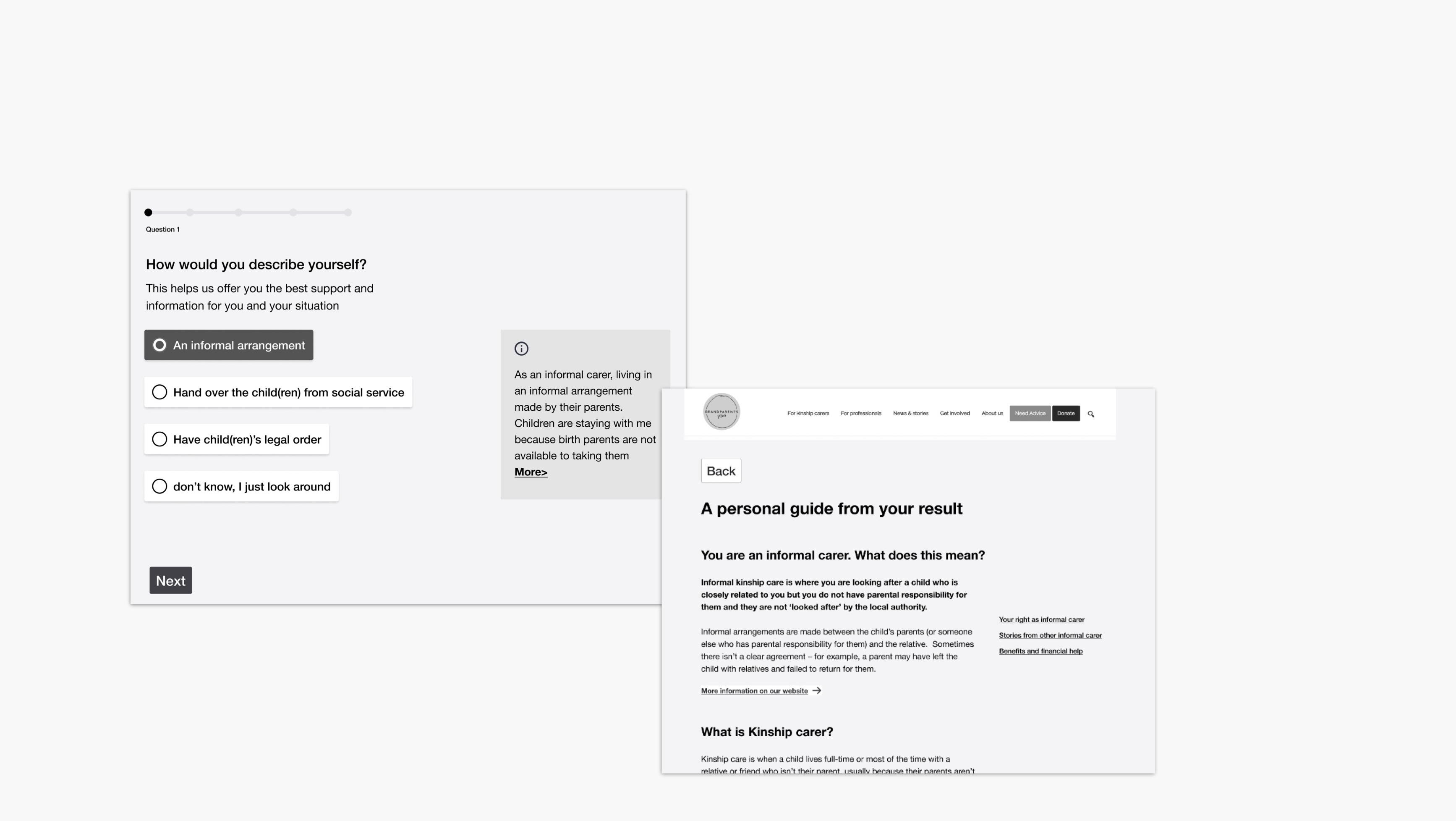
Proposal B — a quiz flow surfacing scenario-specific information based on the carer’s answers.
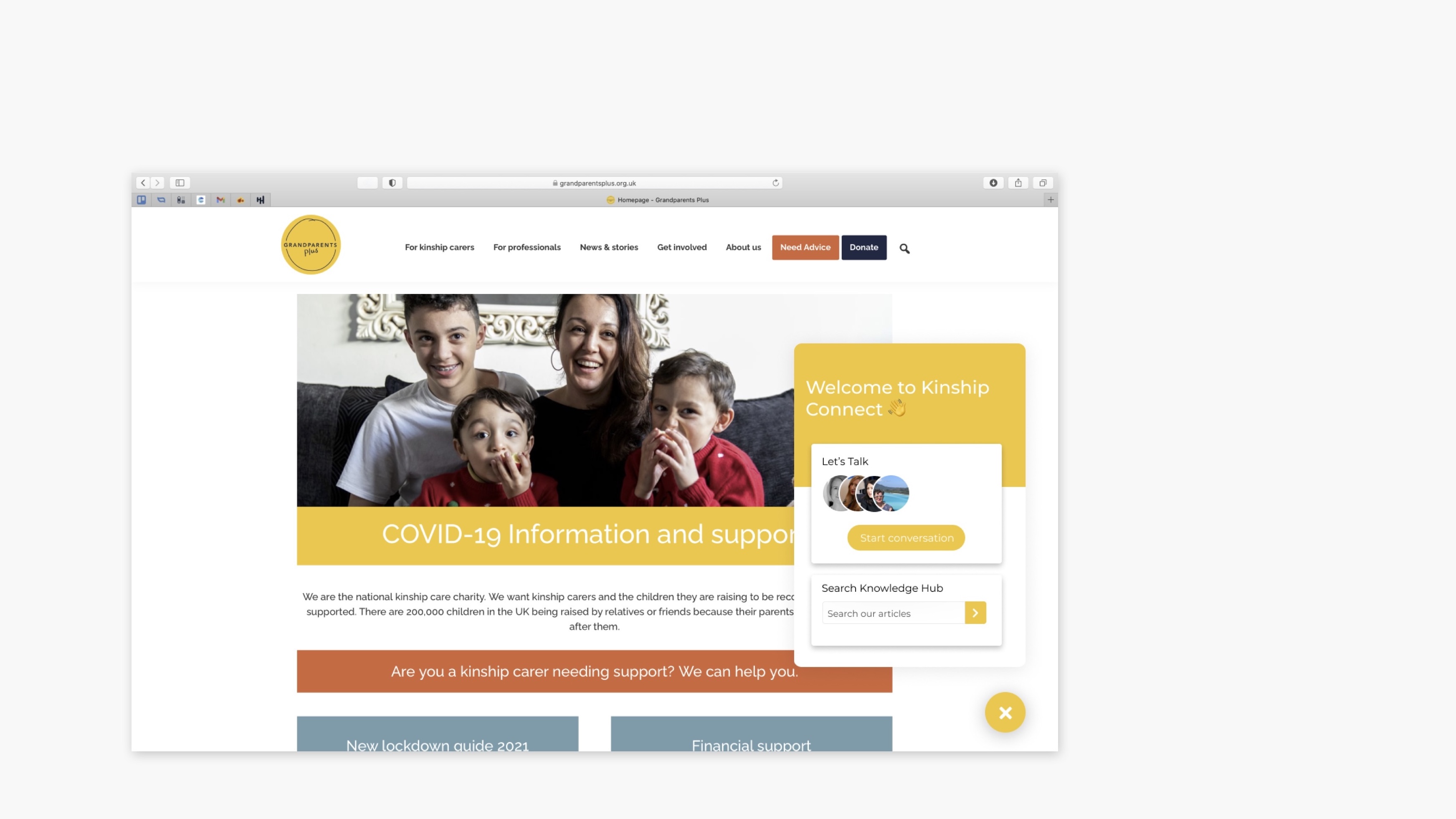
Proposal C — live chat entry point on the Kinship homepage for immediate one-to-one help.
Key Learnings
Building trust and communication with clients was central to this project’s success:
- Streamlined approach — Regular check-ins and aligned workflows kept everyone on the same page
- Transparency — Sharing findings openly, even when they challenged assumptions
- Remote collaboration — Developing effective strategies for distributed teamwork during a critical period